Without an in case of death checklist, a family often faces a search that lasts for weeks after someone dies. Where is the will? Which bank accounts are there? Is there life insurance, and who is the beneficiary? What did they want for the funeral? In fact, most of these answers already exist. They just sit in drawers, inboxes and one person’s memory.
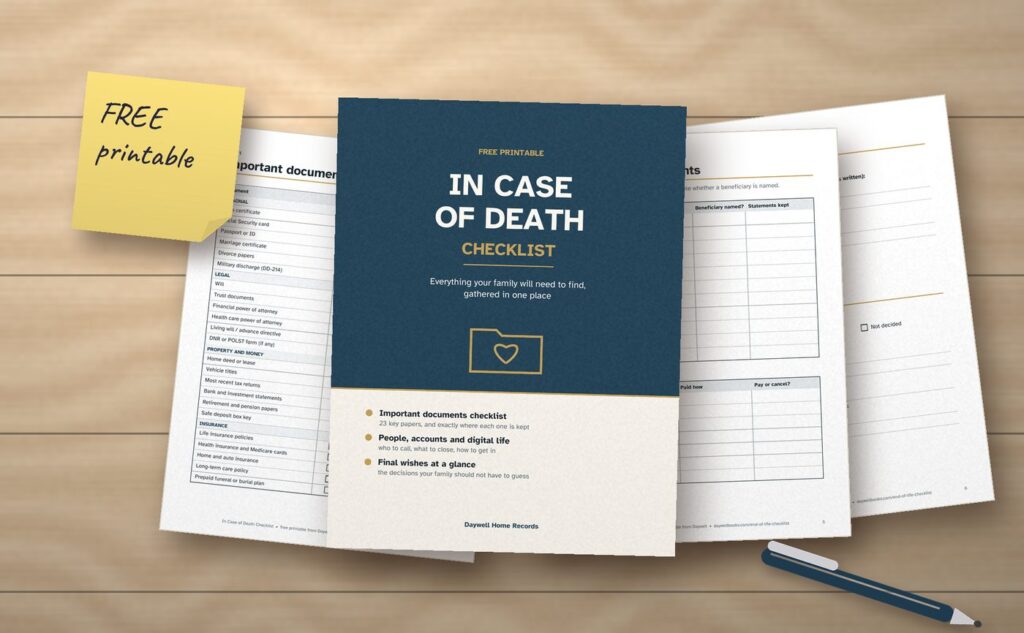
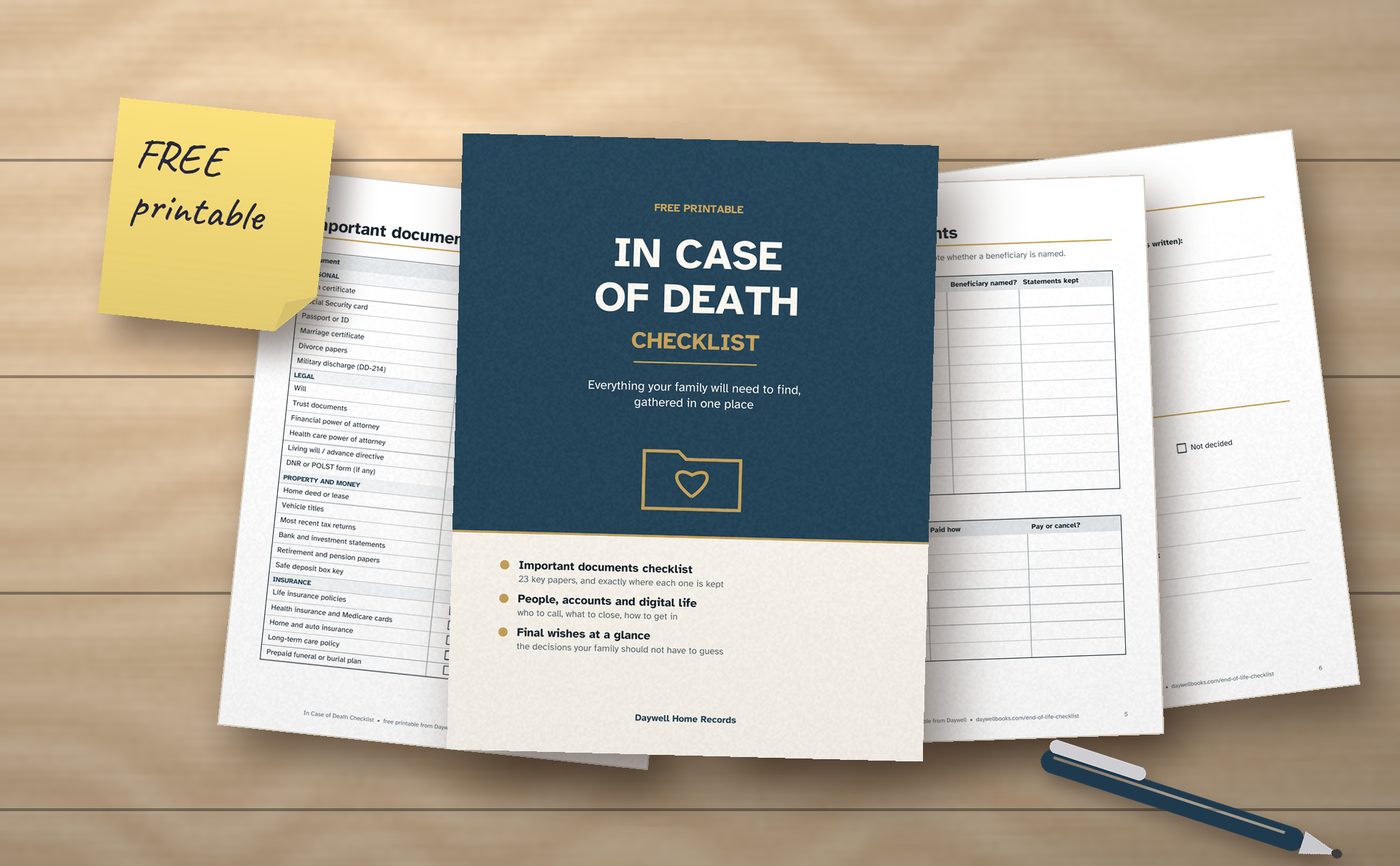
A death binder fixes that. Above all, it holds every important paper, plus clear notes on where to find everything else. This guide walks you through exactly what to put in it, section by section, and you can download the free in case of death checklist to fill in as you go.
What is a death binder?
A death binder (also called an in case of death binder, legacy binder, “when I die” file or end of life binder) is a folder or box that holds your important documents and the information your family will need after you die. However, it does not replace a will. A will says who gets what. Instead, a death binder tells your family where everything is, who to call and what you wanted, so they can actually carry out the will without guessing.
It is also useful long before the end. If you are in hospital or unable to manage your own affairs for a while, the same binder lets a trusted person pay bills and speak to doctors on your behalf.
Three rules before you start
- Write where things are, not what they say. “Fireproof box, hall closet” is enough. However, never write full account numbers or passwords on paper.
- Keep originals together at home. After all, a bank safe deposit box can be slow for family to open after a death, so keep the key and a list of what is inside in the binder instead.
- Tell two people where it is. Your executor and one other trusted person. Otherwise, a binder nobody can find helps no one.
The in case of death checklist: what to put in a death binder
1. Personal documents
Your family will need these papers first, for example for the death certificate, benefits and insurance claims.
- Birth certificate
- Social Security card (or a note of where it is kept)
- Passport or other photo ID
- Marriage certificate, and divorce papers if any
- Military discharge papers (DD-214), which can matter for veterans’ burial benefits
- Your parents’ full names and birthplaces, which the death certificate asks for and family often do not know
2. People to contact
A short list also saves your family hours of searching through an old phone.
- Your executor, and a backup
- Close family and friends who should hear first
- Your lawyer, accountant and financial advisor
- Insurance agents
- Your employer or pension administrator
- Your doctors, and your place of worship if you have one
- Clubs, groups and former colleagues who would want to know
3. Legal documents
- Your will, and any trust documents
- Financial power of attorney
- Health care power of attorney and living will (advance directive)
- A DNR or POLST form, if you have one
- Guardianship wishes for children or dependants
If a lawyer holds the originals, write down the lawyer’s name and phone number and keep copies in the binder.
4. Money, accounts and bills
First, list every place you hold money, and then note whether you have named a beneficiary. However, leave out full account numbers.
- Bank and credit union accounts
- Retirement accounts, pensions and annuities
- Investments and brokerage accounts, including any cryptocurrency and how to access it
- Social Security and other benefits you receive
- Credit cards, loans and the mortgage
- Recurring bills and subscriptions, marked “keep paying” or “cancel”
- Where your recent tax returns are kept
- Safe deposit box location and where the key is
5. Insurance
- Life insurance policies, including any through work
- Health insurance and Medicare cards
- Home, renters and auto insurance
- Long-term care insurance
- Any prepaid funeral or burial plan
6. Home and belongings
- Home deed or lease, and vehicle titles
- Storage units and what is in them
- Where spare keys and safe combinations are kept
- Valuables and family items, and who you would like to have them
7. Digital life
This section matters because most people forget it, and families struggle with it most.
- How to unlock your phone and computer, or who knows
- Your password manager, and who has emergency access to it
- Email accounts, social media, photo libraries and online shopping accounts
- Legacy settings you have turned on, such as Apple’s Legacy Contact, Google’s Inactive Account Manager or a Facebook legacy contact
8. Pets
Who will take each pet, your vet’s details, feeding routines and any medicines.
9. Final wishes
- Burial or cremation
- The kind of service you would like, including music and readings
- Any prepaid arrangements, and the funeral home you prefer
- Organ donation wishes
- Notes for your obituary
10. Letters and personal notes
Although not required, these are often the most treasured part. A few lines to the people you love, your life story in your own words, or the family recipes nobody else knows.
Where to keep your death binder
Most families keep the binder and the completed in case of death checklist at home in a fireproof, waterproof box, with a copy of the key list given to the executor. Some also keep a digital copy in a shared, secure folder. Whatever you choose, the two people you trust most should know where it is and how to get to it.
How often to update it
Review your in case of death checklist once a year, on a date you will remember, such as your birthday. In addition, update it straight away after big changes: a marriage or divorce, a new home, a new account or policy, a death in the family or a change of executor.
Death binder or end of life planner?
A binder holds the original papers. A planner, on the other hand, is where you write everything else down: your wishes, your accounts, your contacts and your story, in an order that makes sense to your family. For this reason, many people use both, with the planner kept in the front of the binder.
The Daywell End of Life Planner for Seniors guides you through all of this in 13 sections, each opening with a page that explains what to write. For couples, the End of Life Planner for Couples puts both of your answers side by side on every page.
Frequently asked questions
Is a death binder the same as a will?
No. A will is a legal document that says who receives your property. A death binder is an organizing tool that tells your family where everything is and what you wanted. Therefore, you need a will as well.
Is it safe to write down my account information?
Write where accounts are held and who to contact, not full account numbers or passwords. Instead, keep passwords in a password manager with emergency access set up for a trusted person.
Should my executor have a copy?
Your executor should at least know where the binder is and how to get to it. For example, many people give their executor a copy of the contact and accounts pages.
How long does it take to put together?
Most people can complete the in case of death checklist over two or three evenings. Gathering missing documents, such as a replacement birth certificate, can take longer, so start with what you already have.
This article is general information for organizing your affairs. It is not legal or financial advice. Speak to a lawyer about your will and estate plan.