ADHD missing assignments follow one of the most frustrating patterns in school: the homework gets done, sometimes at 11pm after a long fight, and then it never reaches the teacher. It sits in the bottom of a backpack, in the wrong folder or in an online portal with the Submit button never pressed. The grade says zero, and the effort goes unseen.
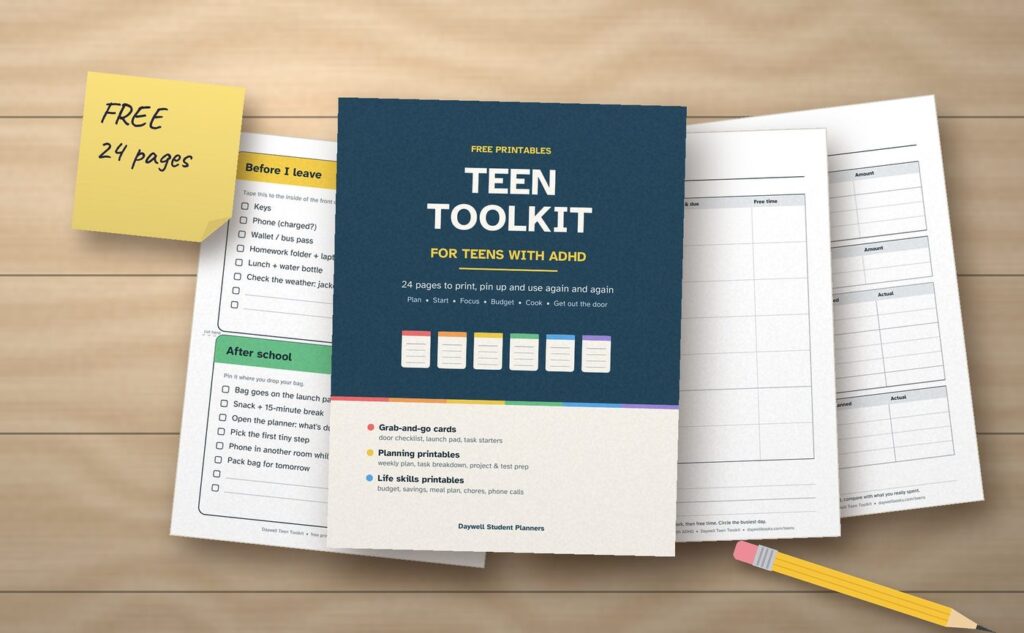
If your teen has ADHD, this is very common, and it is rarely about effort. This guide explains where turned-in homework goes missing and gives you a simple system to close each gap. You can also download the free Teen Toolkit, which includes printable checklists for the steps below.
Why ADHD missing assignments happen
Turning in homework sounds like one step. In reality it is a chain of small ones: write the assignment down, finish it, put it in the right place, take it to school, remember it in the right class and hand it in. ADHD makes it harder to hold all of those steps in mind at once, especially the ones that happen hours later in a busy hallway or classroom. A single dropped step undoes all the work before it.
Most ADHD missing assignments break at one of four points:
- Nobody wrote it down. The teacher said it out loud at the end of class, and your teen forgot it by lunch.
- It is finished but still at home. It is still on the desk, the printer or the kitchen table.
- It is in the bag but lost. It is in the bag, just not anywhere your teen thinks to look.
- It reached class but stayed in the bag. Or, for online work, your teen finished it but never pressed Submit.
The fix is not to try harder at remembering. It is to make each of those steps visible, so nothing depends on memory.
The simple fix: done, packed, turned in
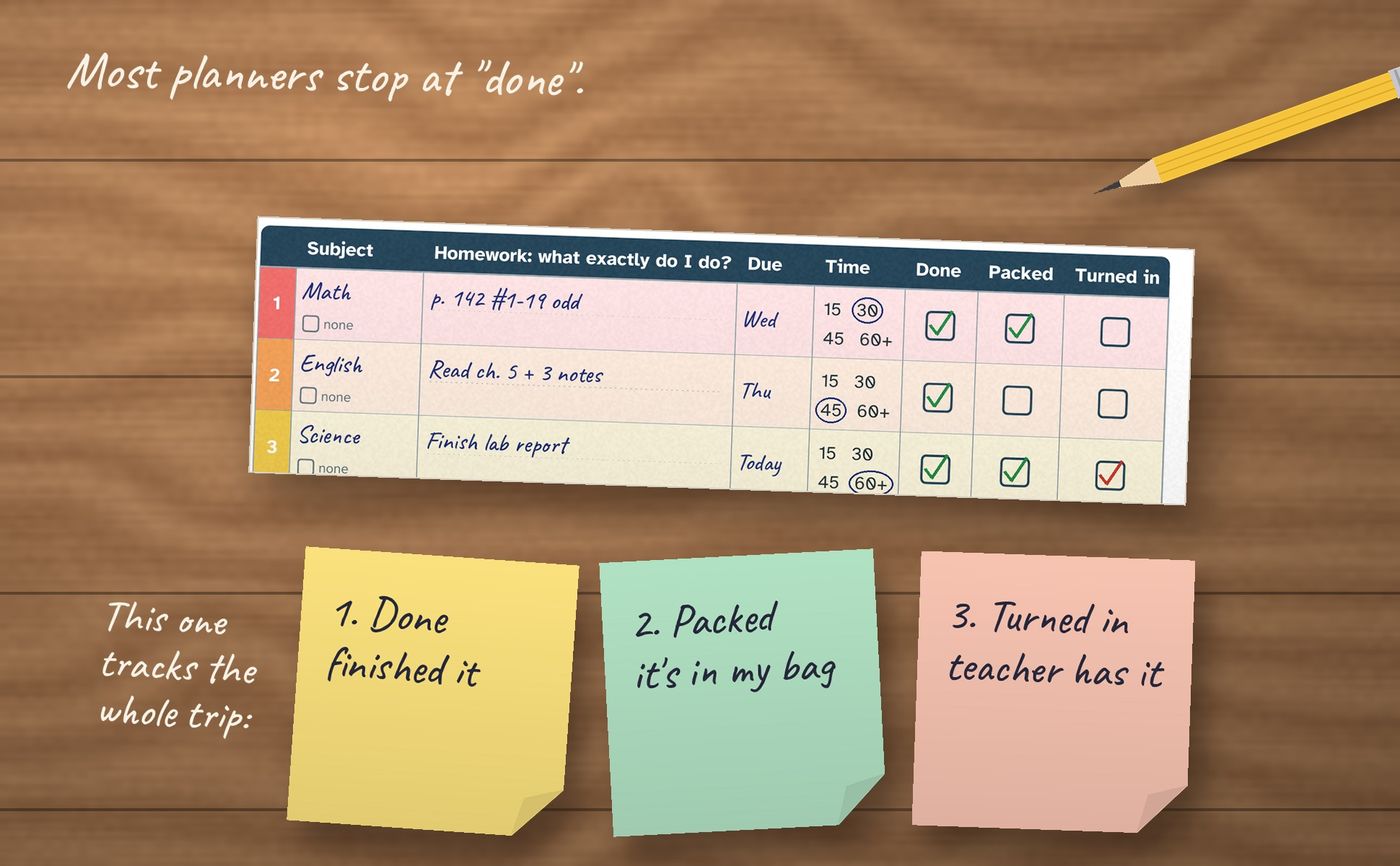
Most planners only ask “is it done?” Add two more checkboxes to every assignment: Packed and Turned in. Done means the work is complete. Packed means it is in the bag, in the turn-in folder. Turned in means the teacher has it, or the online portal shows it as submitted.
Three quick ticks turn an invisible chain into a visible one. At a glance, your teen (and you) can see exactly which step is still open. This is the idea behind the Daywell ADHD Homework Planner, which has all three boxes on every row.
7 strategies to stop ADHD missing assignments
1. One place for every assignment
Sticky notes, a phone app, the school portal and memory are four places to forget. Choose one place, usually a paper planner kept in the same pocket of the backpack, and write every assignment there before leaving class. If nothing is due, write “none” so a blank row never means “forgot to write it down”.
2. Give each subject a color
Match the color of each subject’s folder, notebook and planner row: math is always red, English always blue. Color is faster to find than words, and it makes a missing piece of work easier to spot.
3. Use a single turn-in folder
One bright folder that only holds work to hand in. Finished work goes straight into it, and your teen empties it in class. Teens with ADHD often lose papers between folders, so fewer places means fewer losses.
4. Do a backpack check before bed
Mornings are the worst time to remember things. Every night, with the planner open, check each “done” item and make sure it is in the bag. Then put the bag by the door, a habit sometimes called a launch pad. It takes two minutes and saves a lot of frantic mornings.
5. Treat online work as “not done until submitted”
Online assignments are easy to finish and forget to submit. Make “submitted” part of the routine: press Submit, check the portal shows it as turned in, and only then tick the box. A quick screenshot of the confirmation can settle any later questions.
6. Ask teachers for a simple turn-in routine
Many teachers are happy to help, for example by checking the planner at the end of class, sending a reminder, or setting a fixed place to hand work in. If your teen has a 504 plan or IEP, the school can add accommodations such as a daily planner check or extra reminders to it. Ask the school what is available.
7. Hold one short weekly check-in
Instead of asking “did you turn it in?” every evening, agree on one ten-minute check-in each week, such as Sunday afternoon. Look at the school portal together, note anything missing, and plan when your teen will catch up on it. It keeps you informed without turning every evening into an argument.
What to say instead of nagging
How you ask matters as much as what you ask. A few swaps that tend to go better:
- Instead of “Did you turn in your homework?”, try “What’s still unticked in your planner?”
- Instead of “You need to be more organized”, try “Where does finished work go?”
- Instead of “Why do you always forget?”, try “Which step slipped this time, and what would catch it next time?”
Notice and praise the small wins, like a full week of packed homework, not only the grades. The habit is the goal, and habits grow on encouragement.
Tools that make it easier
Our free Teen Toolkit includes a “Before I leave” door checklist, an “After school” card, a night-before launch pad card and a weekly plan page, all ready to print or fill in on screen.
For daily use, the ADHD Homework Planner gives each subject its own colored row, with Done, Packed and Turned in boxes for every assignment, a backpack check and an optional parent and teacher check line. It has no printed dates, so it lasts a full semester from any start date.
Frequently asked questions
Is my teen just being lazy?
Usually not. Many teens with ADHD put in real effort on the work itself and lose marks on the steps around it. That is why systems that make each step visible tend to help more than reminders to “try harder”.
Should I email the teachers?
A short, friendly email at the start of term explaining what helps your teen is often welcome. Over time, aim for your teen to do more of the asking, as part of learning to advocate for themselves.
How long until a new system works?
Expect a few weeks of gentle reminders before it becomes routine. Keep the system simple, and stick with it even after a bad week.
Does this work without an ADHD diagnosis?
Yes. Any student who does the work but loses track of it can benefit from the same steps.
This article is general guidance on organization and study habits. It is not medical advice. Talk to your teen’s doctor or school about ADHD assessment, treatment or support plans.